
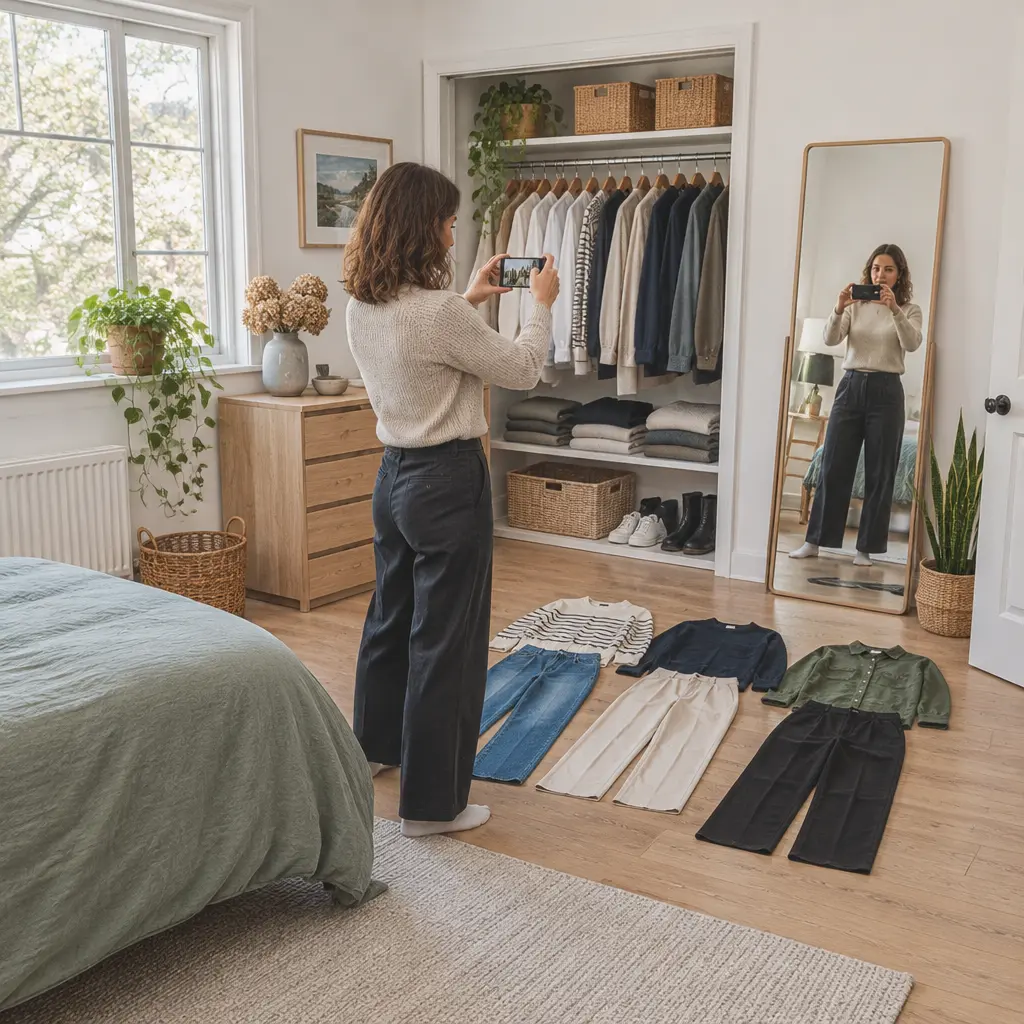
Clothing overbuying is the habit of purchasing garments that go unworn or rarely used, often because shopping responds to impulse, promotions, or an imagined future need rather than a real gap in a wardrobe. To stop buying clothes you never wear, identify what you already own, pause before purchases, and set practical rules for choosing and caring for garments. The approach matters beyond household budgets: the United Nations Environment Programme estimates that the textile sector produces 2–8% of global greenhouse-gas emissions, while the U.S. Environmental Protection Agency estimated that 17 million tons of textile waste were generated in the United States in 2018. A more intentional wardrobe can reduce waste while making getting dressed easier.
Recognizing Clothing Overbuying and Its Causes
Clothing overbuying is not simply owning a large wardrobe. It means repeatedly acquiring clothes that do not fit a person’s actual lifestyle, preferences, or needs. A useful distinction is whether a new item fills a specific, verified gap—or whether the purchase is driven mainly by novelty, emotion, or a temporary deal.
This distinction helps separate different patterns: impulse buying, duplicate buying, aspirational shopping for a lifestyle one does not lead, and trend-driven purchases that quickly lose appeal. Recognizing which pattern applies makes it easier to choose a remedy rather than relying on willpower alone.
Impulse and Emotion-Driven Purchases
An impulse purchase is a decision made with little prior planning, often in response to a sale, a social-media post, or an immediate mood. Shopping can briefly offer excitement or distraction, but that feeling is not proof that an item will be useful. Track what was happening when you bought clothes you later left unworn: note the occasion, emotion, promotion, and whether you had planned the purchase.
The American Psychological Association describes shopping-related behavior as a potential concern when it contributes to distress or financial problems. A simple delay can interrupt the cycle: save the item to a list, wait at least 24 hours, and reconsider it when the urgency has passed. For expensive or recurring purchases, a longer waiting period can be more effective.
Aspirational, Duplicate, and Trend-Driven Clothing
Aspirational buying means purchasing for a hoped-for version of daily life—for example, buying formal clothes for events that rarely happen. Duplicate buying occurs when a person forgets what is already in the closet or buys another version of an item they seldom wear. Trend-driven buying prioritizes short-lived popularity over personal fit and repeat use.
A wardrobe audit can expose all three patterns. The U.S. Environmental Protection Agency’s 2018 estimate of 17 million tons of textile waste, including clothing and footwear, shows why unused garments are not only a personal clutter issue. The figure is a national waste estimate, not a measure of how many items any individual buys, but it underscores the material consequences of disposable consumption.
Building a Wardrobe Inventory Before Shopping
A wardrobe inventory is a record of the clothes a person owns and how well they serve everyday needs. It can be a written list, a spreadsheet, or photographs organized by category. Its purpose is not to impose a particular wardrobe size; it is to make existing options visible before spending money on more.
Once the closet is visible as a system, shopping decisions can be based on actual use. Group garments by type, season, fit, and occasion, then identify what is worn often, what is rarely worn, and what is missing. This connects inventory to the next step: turning observed habits into specific purchase rules.
Audit What You Own and Wear
A clothing audit compares ownership with real use. For a month or a season, record the garments worn or take a quick outfit photograph each day. Include special-occasion and weather-dependent clothing so that infrequent use is not automatically mistaken for waste. Look for practical reasons items stay unused, such as discomfort, poor fit, difficult care, or a lack of matching pieces.
The result can be a short, evidence-based list: items to repair, items to alter, clothing to sell or donate, and genuine gaps to consider later. Donation is not a substitute for reducing unnecessary purchases, since donated textiles may not be resold or reused. Prioritize wearing, repairing, swapping, or reselling garments where appropriate, and follow local textile-recycling guidance for items that cannot be used.
Define a Real Clothing Gap
A real wardrobe gap is a recurring need that existing clothes cannot reasonably meet. It might be a warm layer for a cold commute, work trousers that fit comfortably, or shoes suitable for a regular activity. Write down the situation, how often it arises, and what you have already tried before deciding that a purchase is necessary.
This test filters out vague justifications such as “I might need it someday.” It also helps define the item’s requirements—fit, fabric, color, weather suitability, care needs, and budget—before browsing. Clear requirements reduce the chance of buying an attractive item that cannot be worn with the rest of the wardrobe.
Using Purchase Rules to Prevent Unworn Clothes
Purchase rules are pre-decided boundaries that make clothing decisions more consistent. They can include a monthly spending limit, a no-buy period, a waiting rule, or a requirement that a new garment work with several existing outfits. These rules are most useful when they are realistic and tailored to the reasons a person tends to overbuy.
The environmental case for buying less is substantial, though estimates vary by method and scope. The United Nations Environment Programme reports that the textile sector accounts for an estimated 2–8% of global greenhouse-gas emissions. That range covers a complex supply chain, so it should not be read as the footprint of one garment; it does show that production and consumption choices sit within a significant climate challenge.
Set a Budget, Waiting Period, and No-Buy Boundary
A clothing budget is a planned spending limit, not a target that must be used up. Review recent spending and set an amount compatible with essential expenses and financial priorities. A no-buy boundary can be limited to a category—such as occasionwear or basic tops—or set for a short period while you learn your habits.
Pair the boundary with a waiting period. Put desired items on a list with the date, price, and reason for wanting them; revisit the list after a day, a week, or a month. If the item still solves a documented need, fits the budget, and works with existing clothes, it may be a considered purchase rather than an impulse.
Use a Cost-Per-Wear Check
Cost per wear is the purchase price divided by the number of times an item is worn. For example, a $60 garment worn 30 times costs $2 per wear, while a $30 garment worn twice costs $15 per wear. This is a planning tool, not a guarantee: future wear estimates are uncertain, and a low cost per wear does not justify buying something that is not needed.
Before buying, ask how often the garment is likely to be worn, whether it suits the local climate and routine, and whether its care requirements are manageable. The U.S. Bureau of Labor Statistics’ Consumer Expenditure Surveys provide national data on household spending categories, but they do not determine whether an individual purchase is worthwhile. A personal spending log is more useful for connecting a clothing budget to actual behavior.
Make Sale and Online Shopping Less Persuasive
A discount lowers a price; it does not create a need. Compare the sale item with the written gap list and consider the final cost, including shipping, tailoring, and care. Remove saved payment details, unsubscribe from promotional emails, and avoid browsing shopping apps when bored or upset if those situations trigger unplanned purchases.
For online orders, check the size chart, fabric composition, return deadline, and return conditions before checkout. A convenient return policy can make speculative ordering feel risk-free, but returns still take time and may not always put a garment back into active use. A useful final check is whether you would still want the item at full price and can name at least three outfits that use clothes you already own.
Making Clothes You Own More Wearable
A wearable wardrobe is one in which garments fit, feel comfortable, suit daily activities, and can be combined without excessive effort. Buying less is easier when the clothes already owned are accessible and ready to wear. This means addressing maintenance and outfit planning, not merely clearing space.
The Ellen MacArthur Foundation’s circular-economy work on textiles emphasizes keeping products and materials in use. At a household level, that principle can mean repairing a loose seam, altering a garment, caring for fabric according to its label, or finding a new owner for an item that does not suit you. These steps do not replace careful purchasing, but they help extend the useful life of clothing already made.
Improve Fit, Care, and Outfit Combinations
Fit and comfort are frequent reasons clothes remain unworn. Set aside items that need a repair or alteration and decide whether the work is affordable and worthwhile. Follow garment care labels, store seasonal clothing clean and dry, and keep everyday favorites easy to see and reach.
Create a few reliable outfit combinations from existing pieces and photograph them for reference. This is especially useful when a closet contains garments that seem appealing alone but do not coordinate in practice. If an item repeatedly fails to fit your routine, consider selling, swapping, or donating it responsibly rather than buying more pieces in an attempt to make it work.
Try Secondhand, Repair, and Clothing Swaps Strategically
Secondhand shopping, clothing swaps, and repair can extend garment use, but they work best when guided by the same needs-based rules as new purchases. A free or inexpensive item can still become clutter if it is uncomfortable, difficult to style, or unsuitable for your life. Bring a gap list, check condition and fit, and decline items that do not meet your criteria.
For example, someone who audits a closet and finds no comfortable rain layer for a daily walk can compare repair, borrowing, secondhand, and new options. The best choice is the one that reliably meets the need and is likely to be used—not automatically the newest or cheapest. This practical approach links waste reduction with personal usefulness.
Conclusion: Buy for Your Actual Life
Stopping clothing overbuying starts with recognizing the difference between a real need and an impulse, then checking that need against a wardrobe inventory. Purchase rules—including a budget, a waiting period, and a cost-per-wear check—make decisions less vulnerable to promotions and trends. Better fit, care, outfit planning, repair, and thoughtful reuse help existing garments earn their place.
The wider stakes include household spending and the environmental impacts associated with textile production and waste. Start with one manageable action this week: record what you wear, identify one recurring wardrobe gap, or pause a purchase until you have checked your closet. For further context, consult the United Nations Environment Programme’s textile-sector resources, the EPA’s materials on textiles and waste, and the Ellen MacArthur Foundation’s work on circular fashion.
Sources: United Nations Environment Programme, “UN Alliance for Sustainable Fashion addresses damage of ‘fast fashion’,” 2019, https://www.unep.org/news-and-stories/press-release/un-alliance-sustainable-fashion-addresses-damage-fast-fashion; U.S. Environmental Protection Agency, “Textiles: Material-Specific Data,” https://www.epa.gov/facts-and-figures-about-materials-waste-and-recycling/textiles-material-specific-data; American Psychological Association, “Compulsive Buying,” https://www.apa.org/monitor/2013/07-08/compulsive-buying; U.S. Bureau of Labor Statistics, Consumer Expenditure Surveys, https://www.bls.gov/cex/; Ellen MacArthur Foundation, “A New Textiles Economy: Redesigning Fashion’s Future,” https://ellenmacarthurfoundation.org/a-new-textiles-economy

