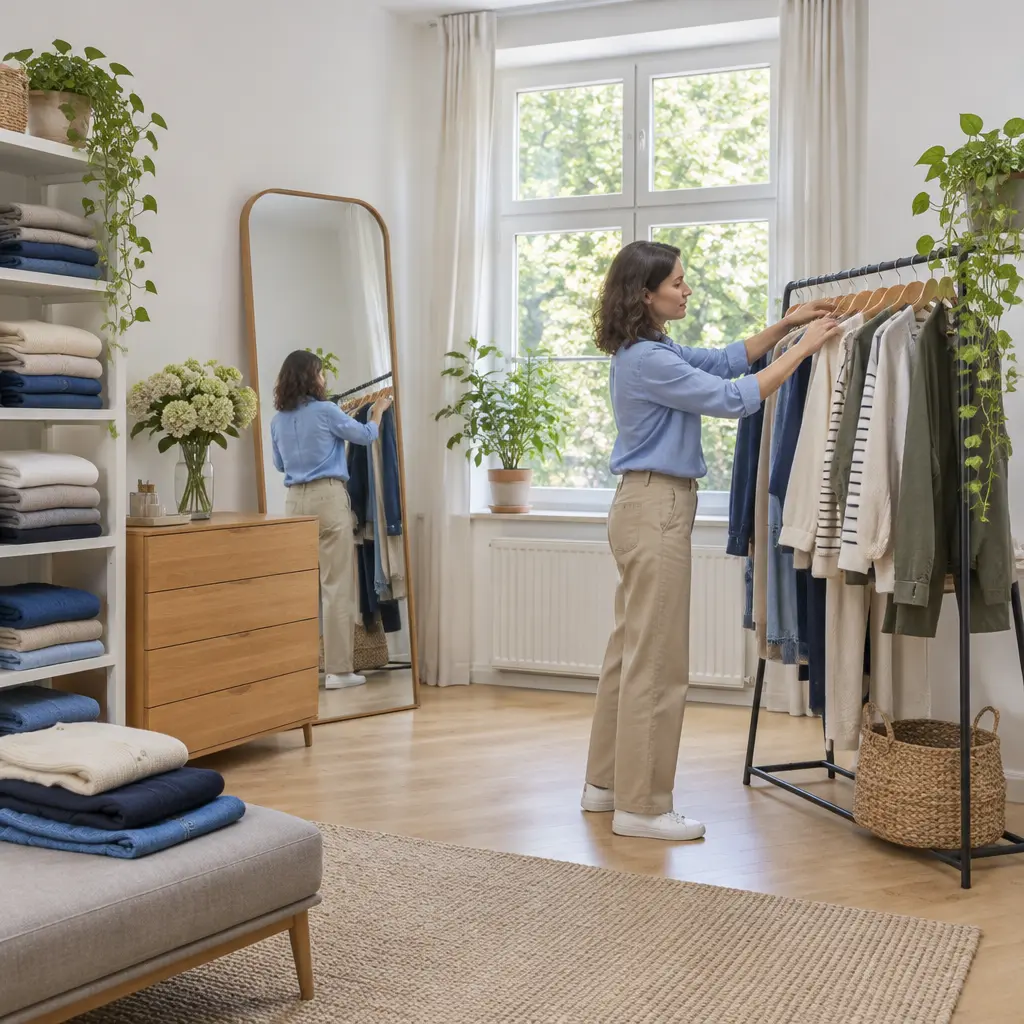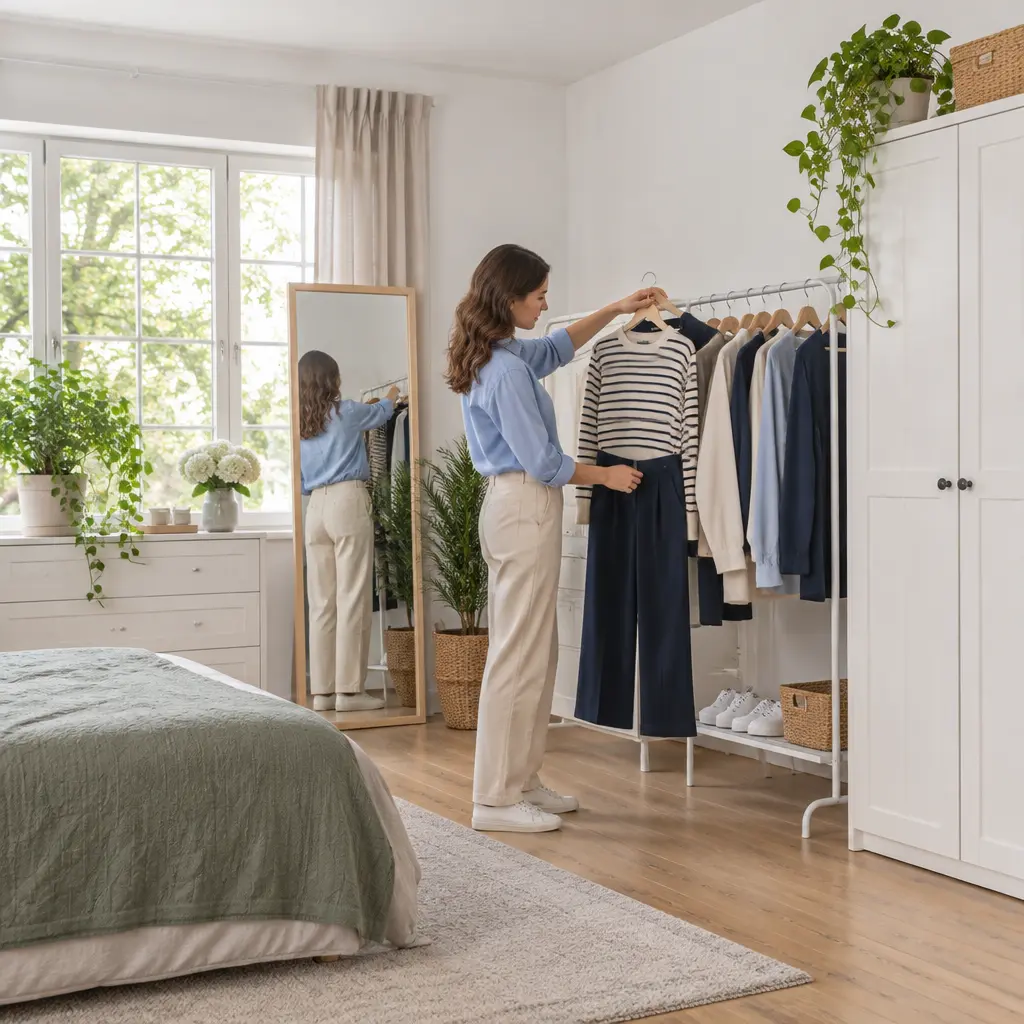
Dressing well without overthinking it means choosing clothes that fit comfortably, suit your everyday life, and work together with little daily effort. A reliable approach is to build a small set of versatile basics, use fit and condition as your first checks, and repeat a few easy outfit combinations. That matters because clothing is a frequent decision: research published in the journal Advances in Consumer Research has reported that people make many everyday choices with limited attention, while wardrobe surveys consistently find that people regularly wear only part of what they own. The sections below turn those observations into a practical system for fit, color, wardrobe planning, and getting dressed.
A Simple Dressing System Makes Everyday Style Easier
Personal style is the repeated pattern of clothing choices that reflects a person’s needs, preferences, and context. There is no single authoritative definition that fits everyone; for practical purposes, dressing well can be defined as wearing clean, comfortable, well-fitting clothes that are appropriate to the occasion and feel like you. This definition favors consistency over trend-chasing.
A useful outfit has three parts: a suitable base, a compatible layer or second piece, and footwear that fits the setting. For example, straight-leg trousers, a plain T-shirt, and clean sneakers make a simple casual combination; replacing the T-shirt with a button-down and the sneakers with loafers can make it more polished. The pieces change, but the decision process stays the same.
Start with the occasion, not the trend
Occasion is the level of formality and practicality a setting requires. Before getting dressed, identify whether the day involves work, travel, exercise, a social event, or a mix. This one-step filter removes options that are uncomfortable or inappropriate before you spend time comparing them. A commute may call for weather-ready shoes, while a formal meeting may require a more structured jacket or dress.
Use a repeatable outfit formula
An outfit formula is a reusable combination of clothing categories, such as “dark trousers + knit top + simple shoes” or “jeans + T-shirt + overshirt.” Formulas reduce the number of decisions without requiring a uniform. Save two or three combinations that work for your most common situations, then vary color, fabric, or accessories when you want a change.
Fit and Condition Make Clothes Look More Intentional
Fit is how a garment sits on the body and allows movement; condition is its state of cleanliness, repair, and wear. These are often more noticeable than brand or price. The University of Minnesota Extension’s clothing-care guidance emphasizes following garment labels and care instructions to help clothing last. In practice, a simple, well-maintained outfit can look more considered than an expensive outfit that is wrinkled, damaged, or uncomfortable.
Check comfort and movement
A practical fit check asks whether you can sit, reach, walk, and bend without pulling or restricting movement. Shoulder seams on a shirt or jacket should generally sit close to the shoulder edge; trouser hems should work with the shoes you actually wear. These are starting points, not strict rules: body shapes and preferred silhouettes differ, and tailoring can improve a garment that is otherwise useful.
Keep a small care routine
Clothing care means cleaning, drying, storing, and repairing garments in ways suited to their materials. Check the care label, remove lint, mend loose buttons, and let shoes dry before storing them. The U.S. Environmental Protection Agency’s guidance on sustainable materials and waste reduction supports extending the useful life of products rather than replacing them unnecessarily. A quick weekly check can prevent small problems from becoming reasons not to wear otherwise good clothes.
A Versatile Wardrobe Uses Compatible Pieces
A versatile wardrobe is a collection of garments that can be combined across multiple outfits and situations. It does not have a universal required size. The United States Environmental Protection Agency reported that 11.3 million tons of textiles were landfilled in the United States in 2018, illustrating the scale of textile disposal and the value of buying thoughtfully and using clothes longer. That figure describes U.S. municipal solid waste, not an individual wardrobe, but it provides a useful reason to favor durable, frequently worn pieces.
Choose basics around your real week
Wardrobe basics are dependable items that suit your routine, climate, and preferred level of formality. Examples might include a comfortable pair of trousers, a few tops, a warm layer, weather-appropriate outerwear, and shoes for everyday use. The right list depends on the person: a remote worker, a nurse, and someone who cycles to work have different clothing needs. Track what you reach for over a few weeks before buying more.
Use a simple color palette
A color palette is a small group of colors that work well together. Choose a few neutrals—such as navy, gray, brown, cream, or black—and add one or two colors you enjoy wearing. This makes mixing easier because more tops and bottoms will coordinate. Color harmony is not a strict science or a requirement for style; the practical test is whether the combinations feel wearable to you and suit the setting.
Buy for use, not for a hypothetical life
A useful purchase fills a real gap, fits well, and works with clothes already in your wardrobe. Before buying, ask whether you can name at least three outfits it would join and whether you would wear it in the next month or season. This “cost per wear” idea divides an item’s price by the number of times it is worn; it is a planning tool, not a guarantee of quality. A lower-priced item worn often may be more useful than a costly piece left untouched.
A Five-Minute Routine Prevents Overthinking
Decision routines are short sequences that turn repeated choices into habits. Behavioral research, including work by psychologists Sheena Iyengar and Mark Lepper on choice and motivation, suggests that more options do not always make decisions easier. A streamlined wardrobe and a repeatable getting-dressed process can therefore reduce friction, even though the best number of choices varies by person.
Prepare for the day ahead
Check the weather and calendar, choose a proven outfit formula, and set out the clothes and shoes. If the day includes different activities, prioritize the most demanding requirement—for example, comfortable footwear for a long commute or a layer for changing temperatures. Preparing the night before is especially useful when mornings are rushed.
Use a short final checklist
- Does the outfit suit the occasion and weather?
- Can you move comfortably in it?
- Are the clothes clean and in good repair?
- Do the pieces and shoes work together?
If the answer is yes, stop adjusting. A reliable outfit does not need to be original every day; it needs to work for the day you have. Keep notes or photos of combinations you like so you can reuse them instead of starting from zero.
Conclusion: Make Style Repeatable
Dressing well without overthinking it comes down to a few connected habits: choose for the occasion, prioritize fit and condition, build a wardrobe from compatible pieces, and rely on outfit formulas. A restrained color palette and a brief preparation routine make those choices faster, while buying for actual use can help reduce unworn clothing and unnecessary replacement. Start by identifying three outfits that already work, note what makes them comfortable and appropriate, and use those observations to guide your next wardrobe decision.
Sources: U.S. Environmental Protection Agency, “Textiles: Material-Specific Data,” https://www.epa.gov/facts-and-figures-about-materials-waste-and-recycling/textiles-material-specific-data; University of Minnesota Extension, “Clothing Care,” https://extension.umn.edu/household-cleaning/clothing-care; Iyengar, Sheena S., and Mark R. Lepper, “When Choice Is Demotivating: Can One Desire Too Much of a Good Thing?,” Journal of Personality and Social Psychology, 2000, https://doi.org/10.1037/0022-3514.79.6.995.