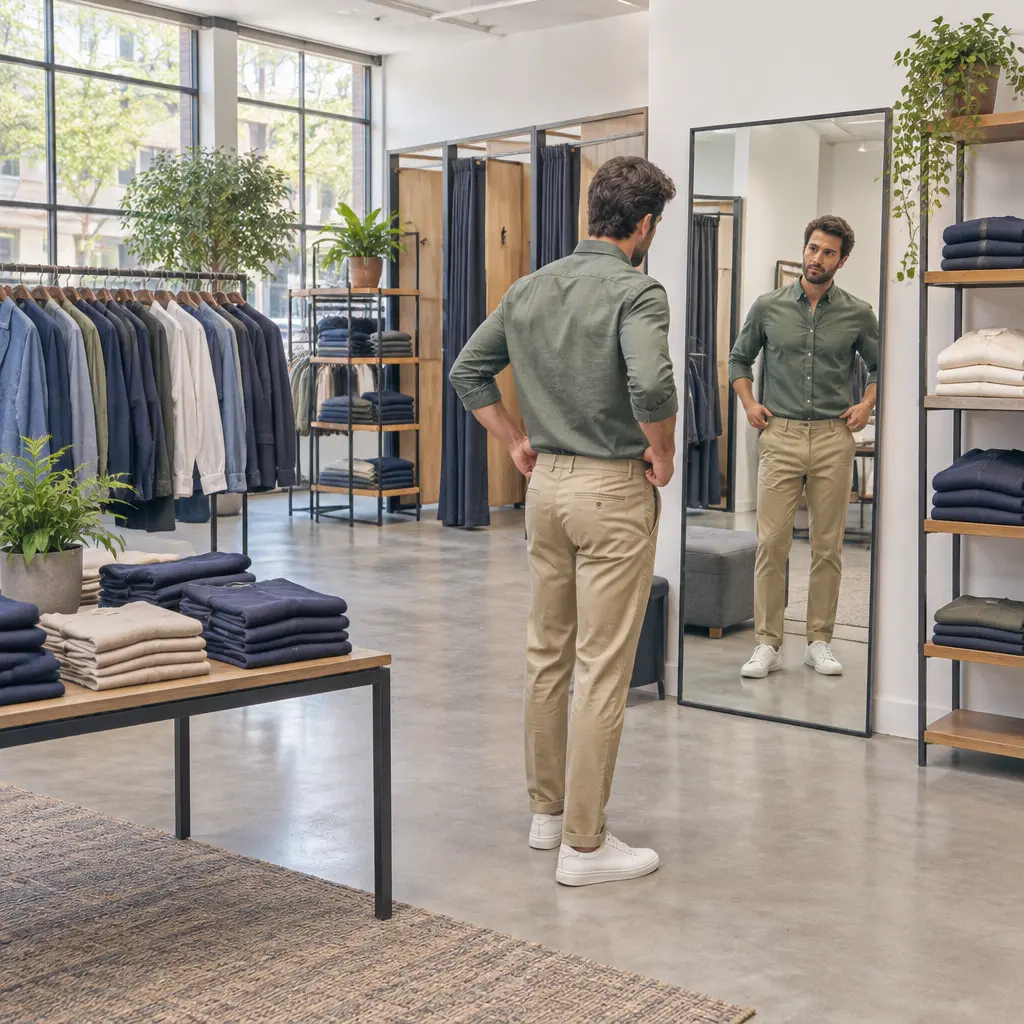
Men’s casual trousers are non-formal pants designed for everyday settings, with options such as chinos, jeans, five-pocket trousers, and relaxed-fit styles. The most common buying mistakes are choosing the wrong fit, fabric, rise, or length; overlooking how and where the trousers will be worn; and relying on a label size instead of trying them on. These choices matter because comfort and durability depend on details such as fiber content, construction, and care—not just appearance. The sections below explain how to assess fit, fabric, construction, and versatility, drawing on clothing-care guidance and textile standards to help you shop more deliberately.
Fit mistakes in men’s casual trousers
Fit is the relationship between a garment’s shape and a wearer’s body and movement needs. There is no single universal fit standard for casual trousers: brands use their own patterns and size charts, so the same waist label can feel different across products. The practical test is whether the trousers sit securely, allow comfortable movement, and fall cleanly without excessive pulling or bunching.
Buying by waist label alone
A tagged waist size is a starting point, not a guarantee of fit. Measure your waist where you intend to wear the trousers, then compare it with the specific brand’s chart. Try sitting, standing, and walking: the waistband should stay in place without digging in, while the seat and thighs should not strain at the seams. If buying online, check the garment’s return policy and product measurements rather than assuming your usual size will work.
Choosing a cut that restricts movement
Slim, straight, tapered, and relaxed describe different leg shapes, but labels are not standardized across brands. A slim cut may look tidy yet feel restrictive if the seat or thigh is too narrow; a relaxed cut may provide ease but appear oversized if the rise and leg are poorly proportioned. Check the fit at the hips, seat, and thighs first, then assess the leg opening. A small amount of stretch can add comfort, but it cannot compensate for a fundamentally incorrect pattern.
Ignoring rise and trouser length
The rise is the distance from the crotch seam to the top of the waistband. A rise that does not suit your torso or preferred wearing position can cause the waistband to slip, the front to pull, or the trousers to feel uncomfortable when seated. Length also changes the overall appearance: excessive fabric can bunch at the shoe, while a hem that is too short may expose more sock than intended. Try trousers with the footwear you expect to wear, and consider hemming when the fit is otherwise right.
Fabric and care mistakes in men’s casual trousers
Fabric is the material, including its fiber composition and construction, from which trousers are made. The Federal Trade Commission’s textile labeling rules require most covered textile products to disclose fiber content, country of origin, and the identity of the manufacturer or responsible business. Reading those details helps shoppers compare likely feel and care needs, although fiber content alone does not reveal the full quality of a garment.
Choosing fabric by appearance alone
Cotton chinos, denim, linen blends, and synthetic or stretch blends can look similar in a product photo but behave differently in use. Heavier or tightly woven cloth may feel more substantial, while lightweight fabric can suit warm weather but may crease or wear differently. Consider the climate, activity, and frequency of use. If the product description does not identify the fiber content or fabric weight, treat that missing information as a reason to investigate further rather than assuming the trousers will perform as pictured.
Overlooking shrinkage, fading, and care instructions
Care instructions affect how trousers look and fit over time. The Federal Trade Commission’s Care Labeling Rule requires care instructions on many garments sold in the United States, based on a reasonable basis that the recommended method will not harm the item. Check the label before buying: trousers that require cleaning you will not realistically follow may be a poor everyday choice. For cotton and denim, follow the label’s washing and drying directions; high heat can contribute to shrinkage in some garments, while repeated washing can alter color and surface appearance.
Assuming stretch means better quality
Stretch fibers can improve ease of movement, but a stretch blend is not automatically more durable or comfortable. The result depends on the fabric, cut, and how the trousers are worn and cared for. Check the listed fiber percentages and test whether the fabric recovers after gentle movement. If the knees or seat bag out quickly, the trousers may not suit your needs even if they felt flexible in the fitting room.
Construction and value mistakes in men’s casual trousers
Construction includes the seams, closures, pockets, waistband, and finishing that hold trousers together and affect daily use. A higher price does not by itself prove better construction, and a low price does not necessarily mean poor value. Compare the details with how often you expect to wear the garment and what repairs or alterations may be needed.
Failing to inspect seams, closures, and pockets
Inspect the stitching for loose threads, skipped stitches, and uneven seams, especially around stress points such as the crotch and pocket openings. Test the button, zipper, and belt loops. Check whether pockets lie flat and can hold the items you normally carry without distorting the trouser shape. These checks are useful in-store and can also guide questions when shopping online.
Confusing price with cost per wear
Cost per wear is the purchase price divided by the number of times an item is worn. It is a personal comparison, not a guaranteed measure of quality: a less expensive pair worn regularly may offer better value than a costly pair that rarely suits your routine. Before paying more, assess fit, fabric, construction, care requirements, and whether the trousers work with clothes you already own.
Versatility mistakes when buying men’s casual trousers
Versatility is how readily a garment works across different outfits and settings. Casual trousers can range from rugged jeans to cleaner chinos, so the best choice depends on your routine, dress expectations, and existing wardrobe. A useful purchase fills a real need rather than duplicating a pair you already wear.
Buying for an imagined occasion
A common mistake is buying trousers for a vague future situation instead of the occasions you actually encounter. Consider whether you need them for commuting, travel, weekend wear, or a workplace with a casual dress code. For example, dark, cleanly finished chinos may bridge a range of casual settings, while rugged denim may be better suited to informal use. When workplace expectations are unclear, check the dress policy before purchasing.
Choosing a color that is hard to coordinate
A strong color or distinctive wash can be appealing but may limit outfit combinations. Neutral shades such as navy, olive, khaki, and charcoal often pair readily with common shirts and footwear, though personal wardrobes differ. Before buying, identify at least a few tops and shoes you already own that work with the trousers. This simple check helps prevent an attractive but rarely worn purchase.
Conclusion: Make men’s casual trousers a considered purchase
Avoiding common trouser-buying mistakes starts with assessing fit in motion, checking rise and length, and reading fabric and care information. Then inspect construction, compare value with likely use, and choose a style that fits your real wardrobe and routine. Use the brand’s size chart, try the trousers with your usual footwear, and review the care label before committing. A few minutes of deliberate checking can help you choose trousers that feel comfortable, work across your everyday settings, and remain useful over time.
Sources: Federal Trade Commission, Threading Your Way Through the Labeling Requirements Under the Textile and Wool Acts, https://www.ftc.gov/business-guidance/resources/threading-your-way-through-labeling-requirements-under-textile-wool-acts; Federal Trade Commission, Clothing and Textile Care Labels, https://www.ftc.gov/business-guidance/resources/clothing-textile-care-labels