
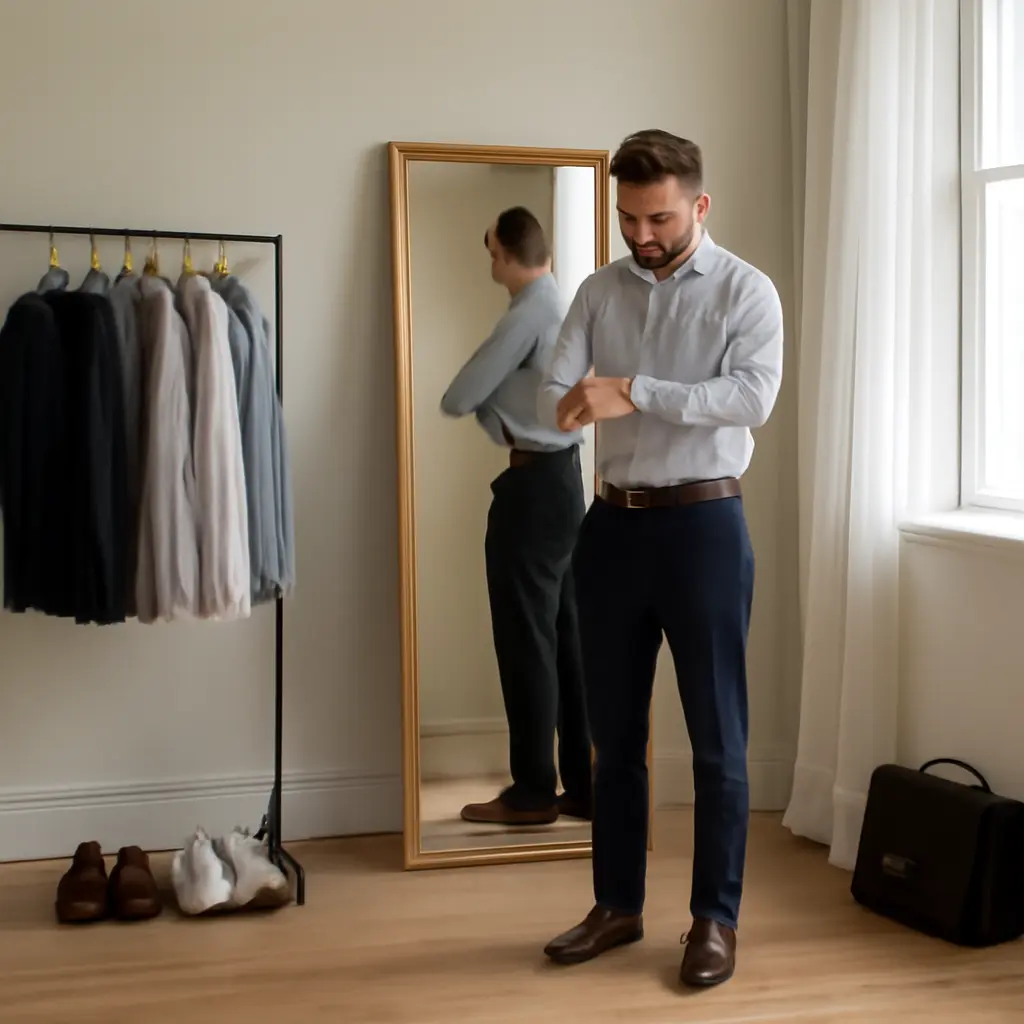
Professional men often use accessories to make work clothes more practical and personal, but small choices can undermine an otherwise polished outfit. A professional accessory is an add-on—such as a belt, watch, bag, tie, or pair of glasses—that supports function or appearance without distracting from the wearer. The most common daily mistakes are poor fit, mismatched formality, excessive accessories, neglected maintenance, and choosing items that do not suit the setting. There is no reliable universal statistic showing how often these errors affect workplace impressions, but the stakes are real: a 2024 Harris Poll for the American Psychological Association found that 81% of U.S. workers said workplace stress affects their mental health, reinforcing the value of routines that reduce avoidable friction. The following guide explains how to choose, coordinate, and care for accessories with more confidence.
Professional Accessory Choices Shape Daily Presentation
There is no single authoritative definition of “professional accessories.” In practical terms, they are clothing add-ons selected to meet a workplace’s expectations while serving a useful or decorative purpose. Their role is contextual: a leather briefcase may suit a formal client meeting, while a durable backpack may be more appropriate for a commute-heavy, casual office. The aim is not to follow rigid matching rules, but to make the accessories look intentional, suitable, and well cared for.
Workplace norms vary by industry, region, and organization. The U.S. Bureau of Labor Statistics’ American Time Use Survey documents the substantial time people spend working and commuting, but it does not prescribe a dress code. That makes practical considerations—comfort, durability, and fit—important alongside appearance. A useful test is whether an accessory helps you do your job, complements your outfit, and fits the occasion.
Fit and Proportion
Fit means that an accessory’s scale and placement work with the wearer and the clothing. A belt should sit securely without a long tail; a tie should generally end around the waistband; and a watch should not slide dramatically around the wrist or dominate a slim cuff. Oversized bags can look cumbersome in a formal setting, while tiny bags may be impractical for carrying work essentials.
Check proportion in a full-length mirror, not only close up. If one item draws attention before your face or the overall outfit, consider a quieter size or design. This is especially useful when wearing a patterned suit, bold tie, or statement glasses, since several strong visual elements can compete.
Formality and Workplace Context
Formality is the degree to which an accessory aligns with the occasion and dress expectations. A polished leather portfolio may work well in a conservative office, while a technical backpack may be better for a casual workplace or frequent travel. Neither is inherently more professional; appropriateness depends on the environment and how the item is maintained.
When uncertain, observe what colleagues and leaders wear, review any written dress guidance, and consider the day’s activities. A client presentation, workshop, and ordinary office day may call for different choices. This context-first approach is more dependable than treating one traditional style rule as universal.
Common Coordination Mistakes in Professional Accessories
Coordination is the process of making accessories work together in color, material, and visual weight. It does not require every item to match exactly. Instead, the goal is to avoid accidental clashes and create a coherent outfit. The classic examples—belt and shoes, watch and cuff, or bag and shoes—are useful starting points, not inflexible laws.
Treating Every Leather Item as a Matching Set
A frequent mistake is wearing leather accessories in noticeably different tones or finishes without a reason. A glossy black belt with casual brown suede shoes can feel disconnected in a formal outfit. For dressier occasions, keep the main leather pieces in a compatible color family and finish. In relaxed outfits, contrast can work if it appears deliberate and the rest of the look is balanced.
Exact shade matching is unnecessary. A dark brown belt can sit comfortably with medium-brown shoes, for example, provided the finishes and overall formality make sense together. Prioritize harmony over trying to make every item identical.
Mixing Metals Without a Visual Plan
Metal coordination concerns details such as a watch case, belt buckle, cufflinks, and tie bar. Mixing silver- and gold-tone pieces is not automatically a mistake, but a random mixture can make an outfit feel unconsidered. Choose one dominant metal, then repeat or intentionally echo another tone in a small detail.
For instance, a silver watch can sit comfortably with a restrained gold tie bar if the combination is repeated elsewhere or supported by the outfit’s colors. The practical rule is to coordinate the visual effect rather than obsess over matching every metal surface.
Using Too Many Statement Pieces
A statement accessory is an item designed to attract attention through color, size, pattern, or distinctive design. Wearing several at once—a bright tie, patterned pocket square, large watch, and conspicuous belt buckle—can create competition rather than personality. Pick one focal point and let the other accessories play supporting roles.
This does not mean every professional outfit must be plain. A patterned tie can add character to a simple suit, while an interesting watch may be enough on its own. Balance is particularly helpful in video meetings, where high-contrast patterns and reflective surfaces can appear more prominent on screen.
Daily Accessory Habits That Reduce Practical Errors
Accessories also affect comfort and function, not just appearance. The best choices are easy to use, suited to daily tasks, and maintained well enough to remain dependable. Thinking through the commute, workday, and meeting schedule can prevent problems such as a bag that does not fit a laptop or a watch that catches on a shirt cuff.
Choosing a Bag That Does Not Suit the Workday
A work bag should carry what is needed without becoming awkward or overloaded. A bag that is too small may force papers or devices to be carried separately; one that is excessively large can look bulky and encourage unnecessary packing. Check dimensions, internal organization, strap comfort, and whether the bag protects the equipment you carry.
For professionals who travel between meetings, a structured bag may help keep documents organized. For a long walk or public-transit commute, padded straps and weather resistance may matter more. The correct choice is the one that fits both the workplace and the real demands of the day.
Wearing a Watch That Is Uncomfortable or Distracting
A watch can be practical, decorative, or both, but it should sit comfortably and suit the setting. A case that is too large may catch on cuffs, while a loose bracelet can slide or knock against a desk. Smartwatch notifications can also distract the wearer or interrupt a meeting if alerts are not managed.
Adjust the strap so the watch stays in place without pinching, and use a quiet or focus setting during meetings when appropriate. If a watch is not comfortable or useful, it is not essential to wear one; professional appearance does not depend on owning a particular accessory.
Ignoring Maintenance and Condition
Maintenance means keeping accessories clean, functional, and free of obvious wear that detracts from their use. Scuffed shoes, a fraying belt, a stained tie, cloudy glasses, and a bag with a broken zipper can make even well-chosen items look neglected. Regular checks are more effective than waiting until an item fails during a workday.
Set aside a few minutes each week to wipe down glasses, inspect bag hardware, check belts for cracks, and clean shoes according to their material. The Federal Trade Commission’s consumer guidance on clothing and textile care emphasizes following care instructions; the same general principle applies to accessories, since leather, metal, and technical fabrics need different treatment.
A Simple System for Better Professional Accessory Decisions
A repeatable system prevents rushed choices and helps build a functional wardrobe. Rather than buying accessories for hypothetical occasions, identify the situations you encounter most often and select versatile pieces that serve those needs. A small, coordinated collection is usually easier to maintain than a drawer full of items that rarely work together.
- Check the occasion and workplace expectations before choosing accessories.
- Confirm that each item fits, feels comfortable, and serves a purpose.
- Coordinate the main colors and finishes without requiring exact matches.
- Choose one focal accessory and keep the rest visually restrained.
- Inspect items for cleanliness, damage, and function before leaving home.
For example, a man attending a client meeting might pair a properly fitted belt with compatible dress shoes, carry a clean structured bag, and wear a restrained watch. On a casual office day, he could switch to a practical backpack and more relaxed footwear while keeping the same principles of fit and condition. The details change; the decision process does not.
Conclusion: Make Accessories Intentional, Comfortable, and Appropriate
The most common professional accessory mistakes are not failures to follow one strict fashion code. They are everyday oversights: poor proportion, mismatched levels of formality, too many focal points, unsuitable bags or watches, and neglected maintenance. Good choices reflect the setting, work comfortably, and support rather than compete with the outfit.
Use a quick check before you leave: Does each item fit the day, work with the rest of the outfit, and look cared for? Start by improving one frequent-use accessory, such as a belt, bag, or pair of glasses, and build from there. For more guidance, consult your employer’s dress expectations and the care instructions provided by accessory manufacturers.
Sources: American Psychological Association, 2024 Work in America Survey, https://www.apa.org/pubs/reports/work-in-america/2024-workplace-health-well-being; U.S. Bureau of Labor Statistics, American Time Use Survey, https://www.bls.gov/tus/; Federal Trade Commission, Care Labeling Rule, https://www.ftc.gov/business-guidance/resources/clothing-textile-wool-acts-rules
