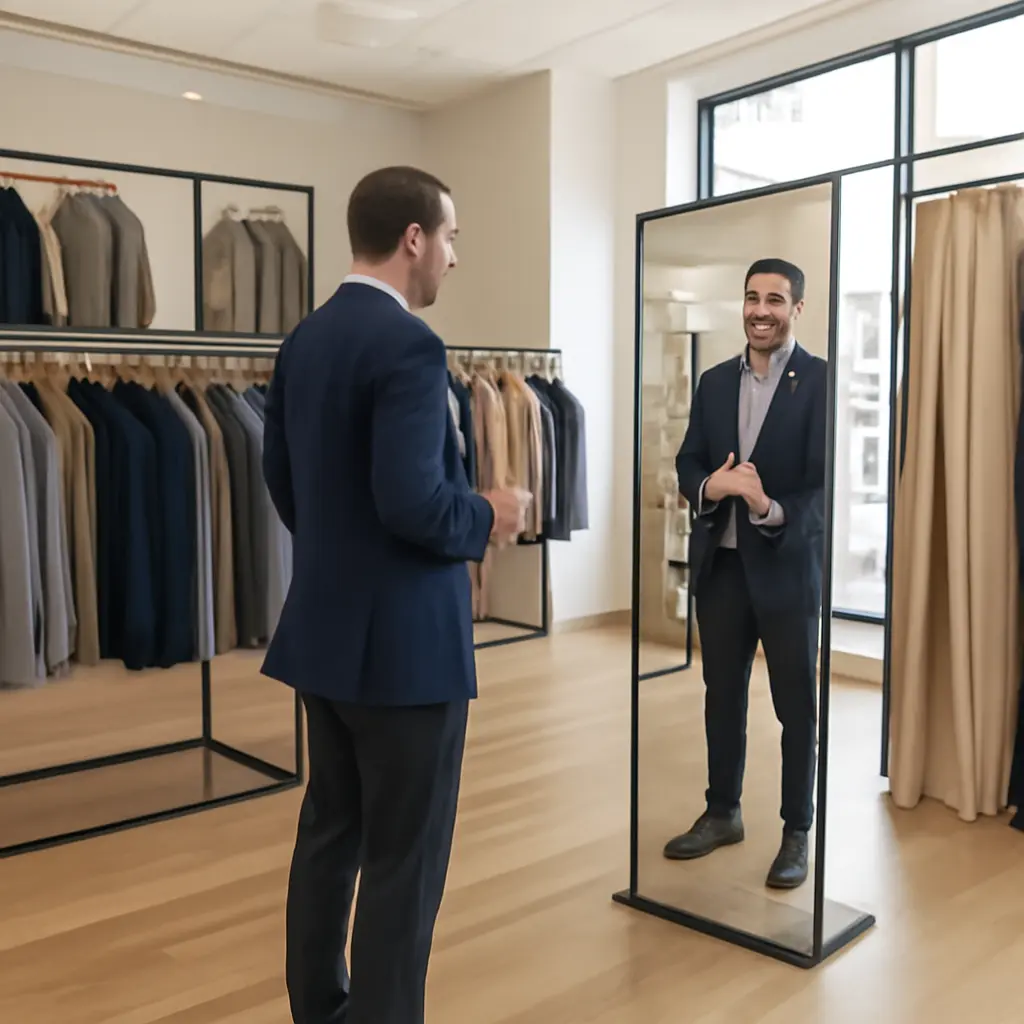
A suit is a coordinated jacket and trousers, typically made from matching fabric; at work, wearing one without looking overdressed is a matter of matching its formality to the office, the occasion, and the people you work with. Choose a less formal suit fabric and cut, dress down the shirt and shoes where appropriate, and use local workplace norms as your guide. That balance matters: Gallup’s 2023 workplace research found that only 27% of U.S. employees were “extremely satisfied” with their workplace, and feeling at ease in a professional setting is one small part of a broader culture of belonging. The practical guide below covers workplace dress codes, suit choices, styling, and ways to check whether an outfit fits the room.
Match suit formality to workplace expectations
Workplace suit formality is the degree to which a suit’s fabric, construction, color, and accompanying accessories align with the expectations of a particular organization and occasion. There is no universal rulebook: the U.S. Office of Personnel Management describes business attire as depending on workplace and agency context, while the Society for Human Resource Management notes that dress-code policies vary by employer and job. In practice, a suit can read as formal, business-casual, or relaxed depending on how it is made and styled.
Read the dress code and the room
A dress code is an employer’s stated or understood standard for workplace clothing. “Business formal” usually points toward a matched suit, dress shirt, and leather shoes; “business casual” leaves more room for an unstructured jacket, knitwear, or chinos; “smart casual” is looser still. These labels are not perfectly standardized, so observe what colleagues wear on ordinary days, not only at presentations or client meetings. If you are new, ask your manager or HR contact whether a suit is expected, optional, or best reserved for particular occasions.
Account for role, industry, and occasion
A suit’s appropriateness also depends on the work being done. Client meetings, interviews, hearings, conferences, and leadership presentations may call for more structure than a regular office day. Conversely, a formal outfit can feel out of step in a hands-on environment where coworkers prioritize mobility or protective clothing. The useful principle is to dress for the most formal part of your day without treating every workday as a special event.
Choose suit features that feel less formal
Suit formality is shaped by several visible features rather than the label alone. Tailoring guidance from the menswear trade commonly distinguishes structured, smooth worsted-wool suits from softer, textured, and less constructed options. A restrained color and a natural fit help a suit look professional without suggesting ceremony.
Prefer versatile colors and subtle texture
Navy, charcoal, and mid-gray are dependable work colors because they pair readily with shirts and shoes. For a softer office look, consider a medium gray, muted blue, or a subtle weave such as hopsack or a small herringbone. Avoid shiny fabric, high-contrast pinstripes, and tuxedo-like details when the aim is everyday ease. A useful test is whether the jacket and trousers look appropriate separately as well as together.
Select softer construction and a natural fit
An unstructured or lightly structured jacket uses less internal padding and shaping than a traditional formal suit jacket. It often feels more relaxed, particularly when paired with a breathable fabric and a clean, comfortable fit. The shoulders should sit smoothly, the jacket should close without pulling, and the trousers should allow easy movement. A suit that fits properly tends to look deliberate rather than like a costume, regardless of whether it is worn with a tie.
Style the suit for everyday work
Styling is the simplest way to adjust a suit’s formality. Keep the suit itself neat, then change one or two supporting elements—such as the shirt, tie, or shoes—rather than making every part of the outfit conspicuously casual. This keeps the look coherent and makes it easier to dress up again when the schedule requires it.
Use shirts and knitwear to soften the look
A crisp shirt without a tie is a straightforward business-casual option where open collars are acceptable. A fine-gauge crewneck or V-neck sweater over a collared shirt can make a suit feel approachable in cooler weather; a knit polo offers another relaxed alternative. Keep colors and patterns restrained, and check the workplace norm before leaving the collar open for a client-facing appointment or formal presentation.
Choose shoes and accessories with restraint
Polished leather dress shoes make a suit look more formal, while clean leather loafers or understated derbies can relax it without sacrificing professionalism. In offices where sneakers are common and permitted, simple, clean sneakers may work with a soft-shouldered suit, but they are not a safe default for every workplace. Keep belts, watches, bags, and pocket squares quiet: one understated accent is usually enough. A tie can remain in your bag and be added if a meeting turns more formal.
Use a practical test before wearing the suit
A reliable outfit check is to compare your look with the organization’s everyday standard, then adjust for the day’s most important meeting. For example, an employee in a casual technology office might wear a navy, lightly structured suit with a knit polo and loafers for a presentation, while choosing jeans and a jacket on an ordinary day if that matches team practice. In a law office or a client-facing financial role, the same suit may be worn with a dress shirt and tie because the professional setting signals a higher level of formality. These are illustrations, not fixed industry rules.
- Check the written dress code and observe what trusted colleagues wear.
- Dress for the day’s most formal appointment, not just the office’s casual baseline.
- Relax one element at a time—such as removing the tie or choosing a softer shirt.
- Make sure the suit is clean, pressed, comfortable, and appropriate for your tasks.
- If uncertain, ask a manager rather than relying on assumptions about the whole industry.
Conclusion: Let workplace context guide the suit
Wearing a suit without looking overdressed means matching its formality to workplace expectations, choosing versatile colors and softer construction, and styling it with considered shirts, shoes, and accessories. A well-fitting suit can be professional without being stiff; the deciding factor is whether it suits your role, your colleagues’ norms, and the day’s demands. Before your next workday, check the dress code, observe the room, and make one deliberate adjustment. For guidance specific to your organization, consult its employee handbook or ask your manager.
Sources: U.S. Office of Personnel Management, Dress Code and Appearance, https://www.opm.gov/policy-data-oversight/worklife/employee-wellness-programs/; Society for Human Resource Management, Dress Codes, https://www.shrm.org/topics-tools/tools/toolkits/managing-employee-dress-codes; Gallup, State of the Global Workplace: 2023 Report, https://www.gallup.com/workplace/349484/state-of-the-global-workplace.aspx.