
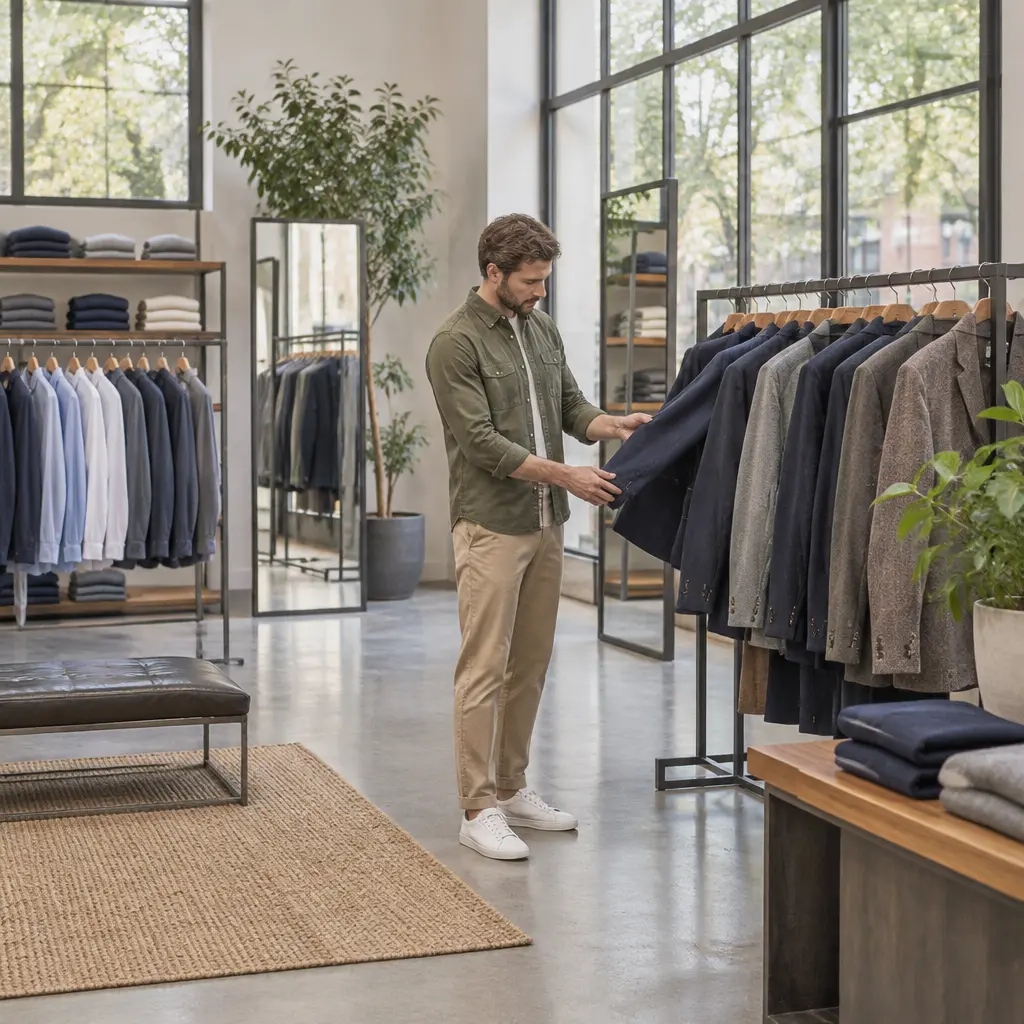
Quality in men’s clothing is the combination of sound materials, thoughtful construction, reliable fit, and care suited to the garment. You can assess it by checking fabric, seams, finishing, and how a piece performs when worn—not by relying on price or branding alone. These checks matter in a market where clothing can be a substantial household expense: the U.S. Bureau of Labor Statistics’ Consumer Expenditure Survey tracks apparel spending as part of annual household outlays. This guide explains what to inspect, how to compare common garment types, and how to use care and cost-per-wear to judge lasting value.
Fabric quality in men’s clothing
Fabric quality describes how well a textile’s fibers, yarns, and construction suit a garment’s purpose and hold up to use. The Federal Trade Commission’s textile labeling rules require most covered products to disclose fiber content and country of origin, with care instructions also required for many textile products. These labels provide useful facts, but they do not by themselves guarantee softness, durability, or good performance.
Fiber content and fabric behavior
Fiber content identifies what a garment is made from; fabric behavior is how that material feels, drapes, breathes, and wears. Cotton is absorbent and common in shirts and casual wear, while wool can provide warmth and resilience in tailoring. Linen is lightweight and breathable but creases readily. Synthetic fibers such as polyester may improve strength, quick drying, or wrinkle resistance, depending on the fabric’s construction and blend. Check the label, then handle the fabric and consider the climate and intended use.
Weave, weight, and surface
Weave is the arrangement of yarns, while fabric weight and surface describe its heft and texture. A tightly woven cloth can resist snagging better than a loose one, although durability also depends on fiber and yarn quality. Hold a garment up to the light: uneven density, visible flaws, or inconsistent color may signal weaker finishing. For trousers and jackets, examine high-friction areas, such as the seat, knees, elbows, and cuffs. For knitwear, inspect for loose loops and early pilling, while remembering that some fibers naturally pill more than others.
Once the material seems appropriate, inspect how it has been turned into a garment. Good fabric cannot compensate for seams that twist, closures that fail, or a cut that restricts movement.
Construction quality in men’s clothing
Construction quality is the care and technical skill evident in a garment’s cutting, assembly, and finishing. The American Sewing Guild’s garment-sewing guidance emphasizes accurate seams, suitable stitching, and appropriate finishing as practical foundations of a well-made garment. In a shop, construction can be assessed through a few simple checks rather than specialized equipment.
Seams and stitching
A seam joins fabric pieces, and stitching secures that join. Look for straight, even stitches and seams that lie flat without puckering. Gently pull the fabric on either side of a seam; it should not gape noticeably or reveal skipped stitches. Check whether stress points—such as pocket corners, belt loops, and the underarm—are reinforced. Stitch count alone is not a reliable quality score: thread strength, seam design, fabric, and workmanship all matter.
Edges, lining, and closures
Finishing covers the details that protect fabric edges and make a garment usable. Inspect hems for secure, even stitching; buttonholes should be cleanly finished, and buttons should be firmly attached. Zippers should run smoothly without catching. On jackets, check whether the lining sits comfortably and allows movement without pulling. A lining is not automatically a sign of higher quality; its usefulness depends on the garment’s design, climate, and intended wear.
Tailoring and garment-specific construction
Construction standards differ by garment category. In a tailored jacket, inspect whether the collar rests close to the neck and whether the shoulder line follows the wearer without pronounced dimpling. On shirts, check collar shape, cuffs, and button spacing. On jeans, examine pocket attachment, belt loops, and the inseam. These are practical inspection points, not guarantees: the right construction is the one suited to the garment’s intended use and the wearer’s body.
Construction and materials determine much of a garment’s potential, but fit determines whether that potential is useful in everyday wear.
Fit and function in men’s clothing
Fit is the relationship between a garment’s shape and the wearer’s body; function is how comfortably and effectively it performs its intended job. A well-fitting item should allow ordinary movement without pulling, excessive bunching, or constant adjustment. Fit is not a universal measurement: body proportions, style, and intended layering all affect what works.
Movement and proportions
Try garments in the posture and motions in which they will be worn. Reach forward in a shirt, sit in trousers, and fasten a jacket to check for strain. Shoulder seams should generally sit near the shoulder edge, while trouser length and rise should suit the wearer’s build and footwear. A tailor can often adjust hems or sleeve length, but major changes to shoulders, armholes, or garment balance may be difficult or expensive.
Fit for purpose and comfort
A quality garment suits its context. Workwear may prioritize mobility and abrasion resistance; office clothing may require a neat drape and compatibility with layers; activewear may emphasize stretch and moisture management. Check pocket placement, ventilation, lining, and closures against likely use. A technically impressive fabric is poor value if it is uncomfortable or unsuitable for the wearer’s routine.
After fit and function, the final test is whether a garment’s expected lifespan and upkeep justify its cost.
Durability and value in men’s clothing
Durability is a garment’s ability to remain serviceable through wear and care; value compares that usefulness with its purchase price and upkeep. The U.S. Environmental Protection Agency identifies textiles among materials in the municipal solid waste stream, making longer use and reuse relevant to waste reduction. A longer-lasting item can reduce replacement frequency, but only if it is worn, maintained, and suited to the owner.
Care requirements and repairability
Care requirements are the cleaning and handling instructions intended to preserve a garment. Read the care label before buying: frequent dry cleaning, delicate washing, or special storage can add ongoing cost and effort. Check whether buttons, zippers, and hems appear repairable, and whether spare buttons are included. The Federal Trade Commission’s care-label guidance explains that care instructions are intended to provide a regular-care basis that will not harm the garment.
Cost per wear and practical comparison
Cost per wear estimates value by dividing the purchase price by the number of times an item is worn. For example, a $120 jacket worn 120 times costs $1 per wear before cleaning and repairs; a $60 jacket worn 20 times costs $3 per wear. This is a comparison tool, not a prediction: actual use, fit, care, and repair costs matter. Compare items of similar purpose and choose the one that fits your budget and routine.
A quick quality check in the store
- Read the fiber and care labels, then decide whether the material suits the garment’s use.
- Inspect fabric for unevenness, weak spots, or loose knit loops.
- Check seams, hems, buttons, buttonholes, and zippers for secure, even finishing.
- Try the garment on and move naturally to test comfort, balance, and room for layering.
- Consider care effort, repairability, and likely wears—not price or branding alone.
Conclusion: judging quality in men’s clothing
Quality in men’s clothing is best judged through fabric, construction, fit, and expected service life together. Labels provide useful fiber and care information; seams, closures, and finishing reveal workmanship; movement tests reveal whether fit serves the wearer; and care needs and cost per wear help assess value. Use these checks before buying, follow the care label, and repair useful garments when practical. For further guidance, consult textile labeling and care information from the Federal Trade Commission and garment-care resources from the American Sewing Guild.
Sources: Federal Trade Commission, Threading Your Way Through the Labeling Requirements Under the Textile and Wool Acts, https://www.ftc.gov/business-guidance/resources/threading-your-way-through-labeling-requirements-under-textile-wool-acts; Federal Trade Commission, Care Labeling of Textile Wearing Apparel and Certain Piece Goods, https://www.ftc.gov/legal-library/browse/rules/care-labeling-textile-wearing-apparel-certain-piece-goods; U.S. Bureau of Labor Statistics, Consumer Expenditure Surveys, https://www.bls.gov/cex/; U.S. Environmental Protection Agency, Textiles: Material-Specific Data, https://www.epa.gov/facts-and-figures-about-materials-waste-and-recycling/textiles-material-specific-data; American Sewing Guild, Sewing Resources, https://www.asg.org/

